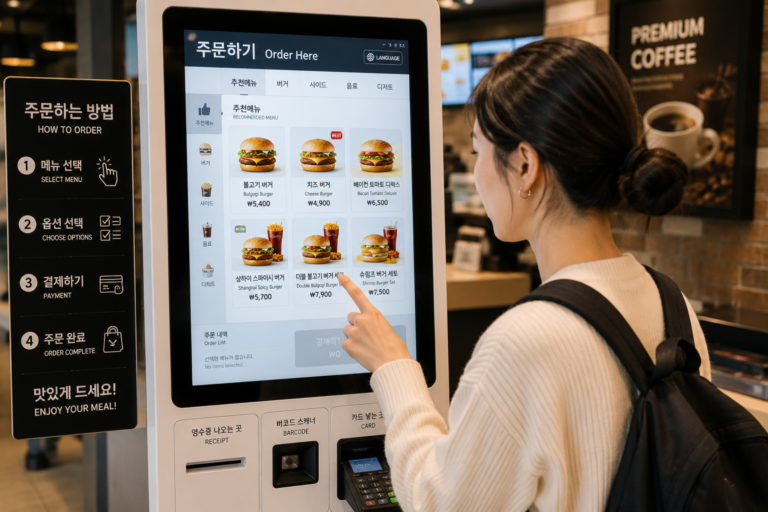
50 Korean Phrases You’ll Actually Use on Your First Trip to Korea
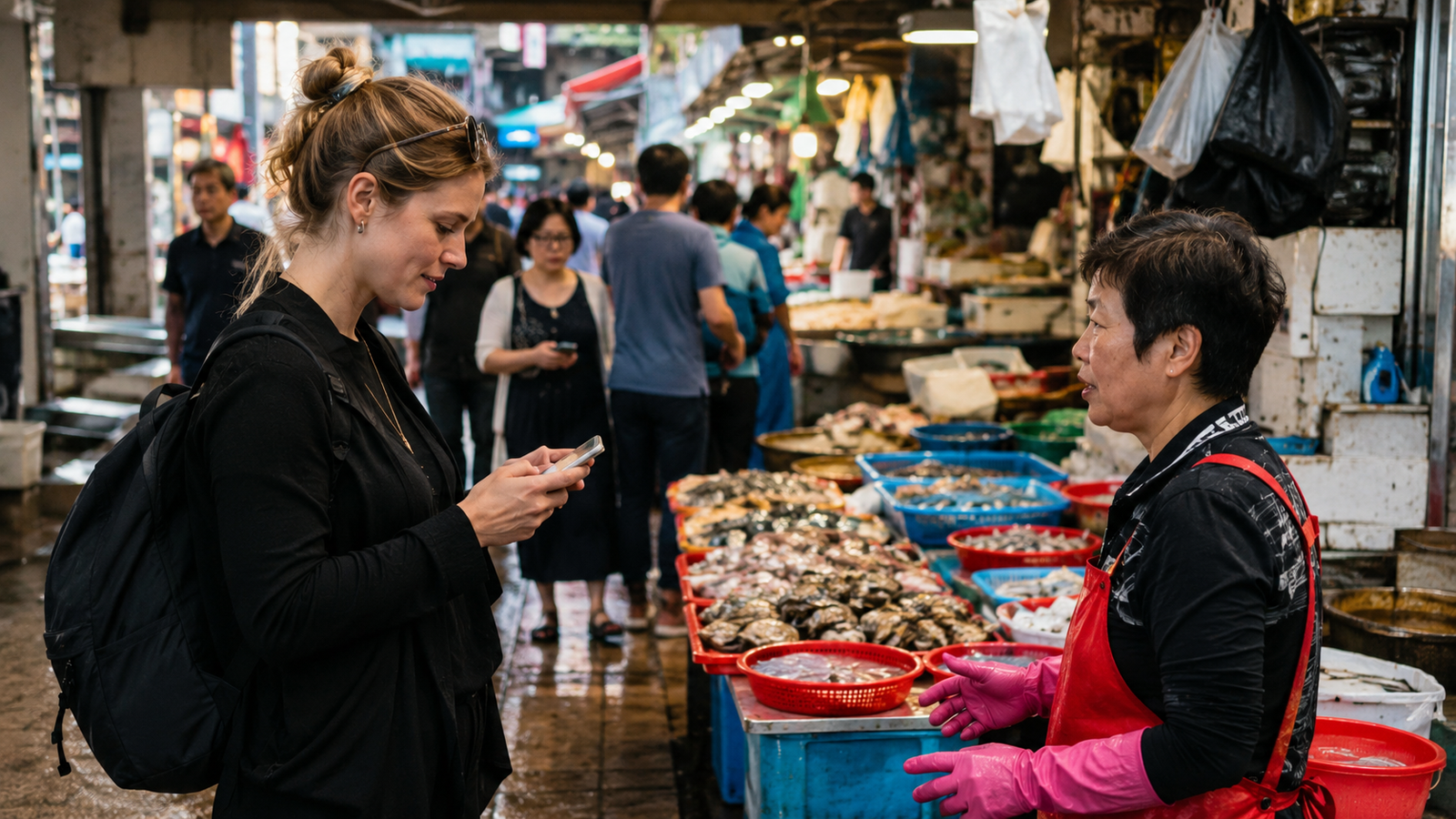
You don’t need to learn hundreds of Korean words before your first trip to Korea.
You just need the phrases that actually come up when you are ordering food, using the subway, taking a taxi, shopping, checking into a hotel, or asking someone for help.
These are 50 Korean phrases you can actually use during your trip — not just textbook Korean.
Each phrase includes the Korean expression, romanization, English meaning, and — when it matters — a short tip on how Koreans actually use it in real life.
👋 1. Basic Greetings & Everyday Korean
1. 안녕하세요.
Annyeonghaseyo.
Hello.
A safe and polite greeting you can use almost anywhere.
2. 감사합니다.
Gamsahamnida.
Thank you.
3. 괜찮아요.
Gwaenchanayo.
It’s okay. / I’m okay. / No, thank you.
4. 네.
Ne.
Yes.
5. 아니요.
Aniyo.
No.
6. 잠시만요.
Jamsimanyo.
Just a moment, please.
7. 저기요.
Jeogiyo.
Excuse me.
8. 죄송합니다.
Joesonghamnida.
I’m sorry. / Excuse me.
If you want to get a staff member’s attention in a restaurant or café, 저기요 (jeogiyo) is often more natural than starting with a formal expression.
✈️ 2. Airport & Arrival
9. 입국심사 어디예요?
Ip-guksimsa eodiyeyo?
Where is immigration?
10. 수하물 찾는 곳 어디예요?
Suhamul chatneun got eodiyeyo?
Where is baggage claim?
11. 공항철도 어디예요?
Gonghangcheoldo eodiyeyo?
Where is the airport railroad?
12. 서울역 가려면 어떻게 가요?
Seoul-yeok garyeomyeon eotteoke gayo?
How do I get to Seoul Station?
13. 유심 어디서 사요?
Yusim eodiseo sayo?
Where can I buy a SIM card?
14. 환전 어디서 해요?
Hwanjeon eodiseo haeyo?
Where can I exchange money?
🚇 3. Subway & Public Transportation
15. 지하철역 어디예요?
Jihacheol-yeok eodiyeyo?
Where is the subway station?
16. 몇 번 출구예요?
Myeot beon chulgu-yeyo?
Which exit number is it?
Subway exit numbers matter a lot in Korea. At large stations, choosing the wrong exit can mean several extra minutes of walking.
17. 홍대입구역 가요?
Hongdae-ipgu-yeok gayo?
Does this go to Hongik University Station?
18. 이 버스 명동 가요?
I beoseu Myeongdong gayo?
Does this bus go to Myeongdong?
19. 여기서 갈아타요?
Yeogiseo garatayo?
Do I transfer here?
20. 티머니 카드 어디서 사요?
Timeoni kadeu eodiseo sayo?
Where can I buy a T-money card?
21. 카드 충전해 주세요.
Kadeu chungjeonhae juseyo.
Please top up this card.
22. 여기서 내려요?
Yeogiseo naeryeoyo?
Do I get off here?
🚕 4. Taxi
23. 여기로 가 주세요.
Yeogiro ga juseyo.
Please take me here.
24. 이 주소로 가 주세요.
I jusoro ga juseyo.
Please take me to this address.
25. 얼마나 걸려요?
Eolmana geollyeoyo?
How long does it take?
26. 여기서 세워 주세요.
Yeogiseo sewo juseyo.
Please stop here.
27. 카드 돼요?
Kadeu dwaeyo?
Can I pay by card?
🍜 5. Restaurant & Café
28. 저기요, 주문할게요.
Jeogiyo, jumunhalgeyo.
Excuse me, I’d like to order.
29. 이거 주세요.
Igeo juseyo.
This one, please.
If you cannot pronounce the menu name, just point to the item and say 이거 주세요.
30. 뭐가 제일 인기 있어요?
Mwoga jeil ingi isseoyo?
What is the most popular?
31. 안 매운 거 있어요?
An maeun geo isseoyo?
Do you have anything that isn’t spicy?
32. 이거 매워요?
Igeo maewoyo?
Is this spicy?
33. 물 좀 주세요.
Mul jom juseyo.
Could I have some water, please?
34. 포장해 주세요.
Pojanghae juseyo.
Please make it to go.
35. 여기서 먹을게요.
Yeogiseo meogeulgeyo.
I’ll eat here.
36. 계산할게요.
Gyesanhalgeyo.
I’d like to pay.
How Koreans Actually Say It
사장님, 계산할게요.
Sajangnim, gyesanhalgeyo.
I’d like to pay.
At a small restaurant or neighborhood shop, Koreans often call the owner or person in charge 사장님 (sajangnim). At a large café or chain store, 저기요 (jeogiyo) is usually safer and more natural.
37. 카드로 할게요.
Kadeuro halgeyo.
I’ll pay by card.
38. 아아 주세요.
A-a juseyo.
An iced Americano, please.
아아 is a casual abbreviation Koreans commonly use for 아이스 아메리카노 — iced Americano.
🛍️ 6. Shopping & Convenience Stores
39. 이거 얼마예요?
Igeo eolmayeyo?
How much is this?
40. 다른 사이즈 있어요?
Dareun saijeu isseoyo?
Do you have another size?
41. 입어봐도 돼요?
Ibeobwado dwaeyo?
Can I try this on?
42. 봉투 주세요.
Bongtu juseyo.
A bag, please.
43. 영수증 주세요.
Yeongsujeung juseyo.
A receipt, please.
44. 현금만 돼요?
Hyeongeumman dwaeyo?
Is it cash only?
🏨 7. Hotel & Accommodation
45. 체크인할게요.
Chekeuinhalgeyo.
I’d like to check in.
46. 예약했어요.
Yeyakhaesseoyo.
I have a reservation.
47. 와이파이 비밀번호가 뭐예요?
Waipai bimilbeonhoga mwoyeyo?
What is the Wi-Fi password?
48. 짐 맡길 수 있어요?
Jim matgil su isseoyo?
Can I leave my luggage here?
🆘 8. Asking for Help
49. 이거 어떻게 해요?
Igeo eotteoke haeyo?
How do I do this?
How to Ask Naturally
At a small restaurant or local shop:
사장님, 이거 어떻게 해요?
Sajangnim, igeo eotteoke haeyo?
How do I use this?
At a larger café or chain store:
저기요, 이거 어떻게 해요?
Jeogiyo, igeo eotteoke haeyo?
Excuse me, how do I use this?
In a normal everyday situation, these expressions usually sound more natural than immediately saying 도와주세요!
50. 화장실 어디예요?
Hwajangsil eodiyeyo?
Where is the restroom?
⭐ If You Only Learn 10, Learn These
안녕하세요. — Hello.
감사합니다. — Thank you.
저기요. — Excuse me.
이거 주세요. — This one, please.
이거 얼마예요? — How much is this?
카드 돼요? — Can I pay by card?
계산할게요. — I’d like to pay.
화장실 어디예요? — Where is the restroom?
이거 어떻게 해요? — How do I do this?
여기로 가 주세요. — Please take me here.
You Don’t Need Perfect Korean
You do not need perfect pronunciation or perfect grammar to travel in Korea.
Sometimes one short Korean sentence, a smile, and pointing at your phone or menu are enough.
The goal is not to sound like a textbook. The goal is to communicate.
Start with the phrases you are most likely to need and actually try using them.
That first successful conversation in Korean may become one of the moments you remember most from your trip.
Travel smarter. Learn real Korea. Experience Korea like a local.
💬 Reader Question
Which Korean phrase do you think you would use first in Korea?
And is there a situation you want Korea First Trip to explain next — restaurants, taxis, hotels, shopping, nightlife, emergencies, or something else?
Leave a comment below.
Your question might become the next Korea First Trip guide.