
Where to Stay in Seoul for Your First Trip: Myeongdong vs Hongdae vs Gangnam (2026)
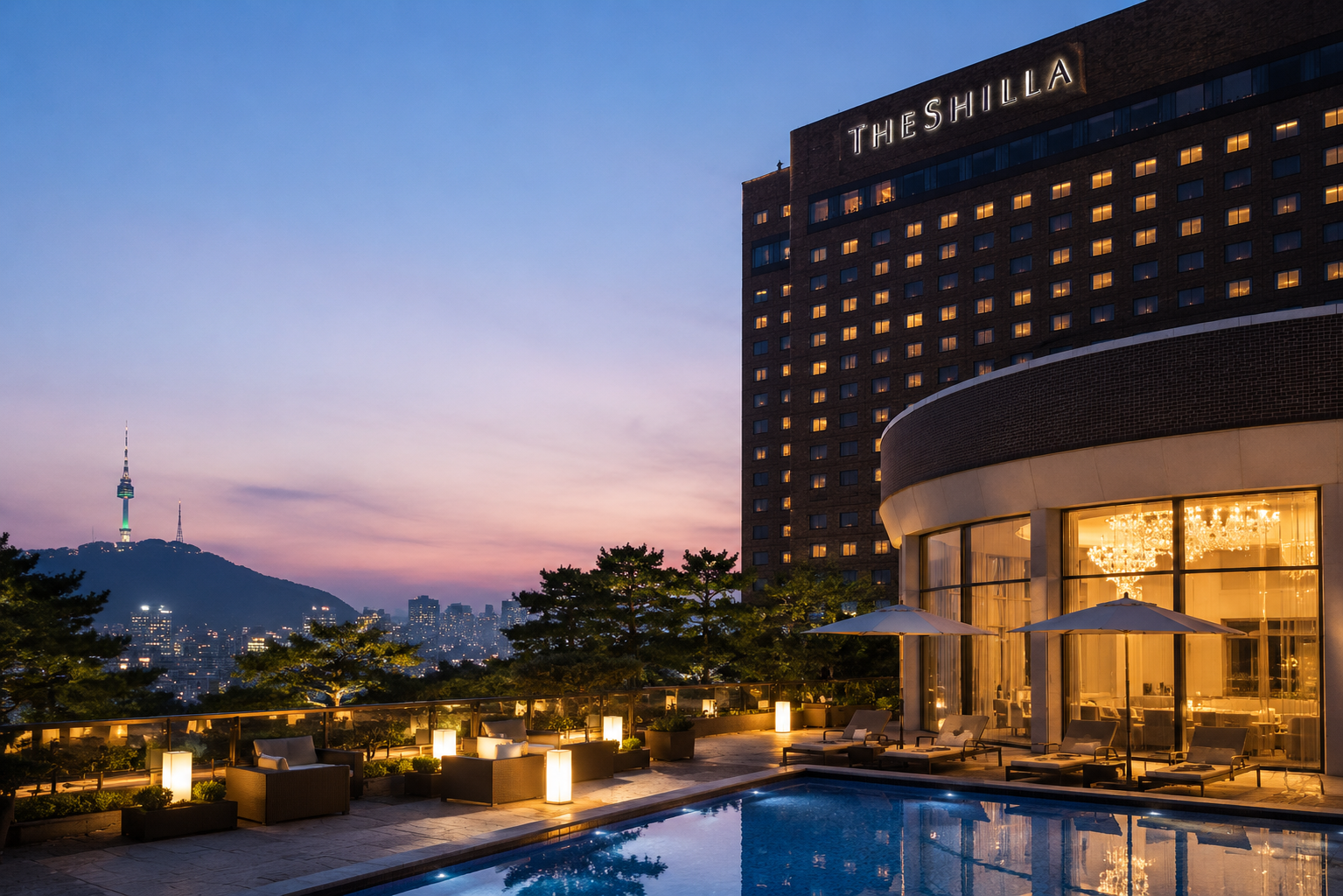
If you’re wondering where to stay in Seoul for your first trip, you probably have more questions than just which area to choose. How much should you budget for a hotel? What services can you expect? What should you check before booking? I looked into all of that, along with the differences between Myeongdong, Hongdae, Gangnam and Jongno.
Contents
| # | Section | What You’ll Find |
|---|---|---|
| 1 | Quick Answer: Where Should You Stay in Seoul? | A quick look at which area may fit your first Seoul trip. |
| 2 | How Much Does a Hotel in Seoul Cost? | Get a realistic idea of what to budget for a hotel in Seoul. |
| 3 | Hotel Prices by Area: Myeongdong, Hongdae, Gangnam & Jongno | Compare the four areas and see a real hotel example in each one. |
| 4 | Check the Location Before You Book | Check subway access, walking routes and airport connections before choosing a hotel. |
| 5 | Breakfast, Luggage Storage, Laundry & Other Hotel Services | Check the hotel services that can actually make your stay easier. |
| 6 | What to Check Before You Book a Hotel in Seoul | Check room size, room type, recent reviews and cancellation rules before booking. |
| 7 | Which Seoul Area Is Best for Your Trip? | Match Myeongdong, Hongdae, Gangnam or Jongno to the kind of trip you’re planning. |
| 8 | My Final Pick: Where I’d Stay in Seoul | My simple starting point if I were choosing a Seoul hotel for a first trip. |
Quick Answer: Where Should You Stay in Seoul?
If this is your first trip to Seoul, I’d start by looking at Myeongdong, Hongdae, Gangnam and Jongno. They’re all popular places to stay, but they can make your trip feel quite different depending on what you plan to do.
Myeongdong — My easiest starting point for a first trip, especially if your sightseeing plans are spread across Seoul.
Hongdae — A good area to check if cafés, restaurants, nightlife and direct AREX access from Incheon Airport matter to you.
Gangnam — Makes more sense if a lot of your plans are around COEX, Apgujeong, Cheongdam or K-beauty clinics.
Jongno — Worth checking if you want to stay close to the palaces, Insadong and Ikseondong.
I wouldn’t choose between them by neighborhood name alone. I’d look at where the hotel actually sits on the map, how close it is to the subway, and where I’ll be spending most of my days.
Price still matters, of course. For a clean, conveniently located hotel, around $100–150 per night is a useful starting budget. I’ll break down the actual prices and hotel examples in the next sections.
How Much Does a Hotel in Seoul Cost?
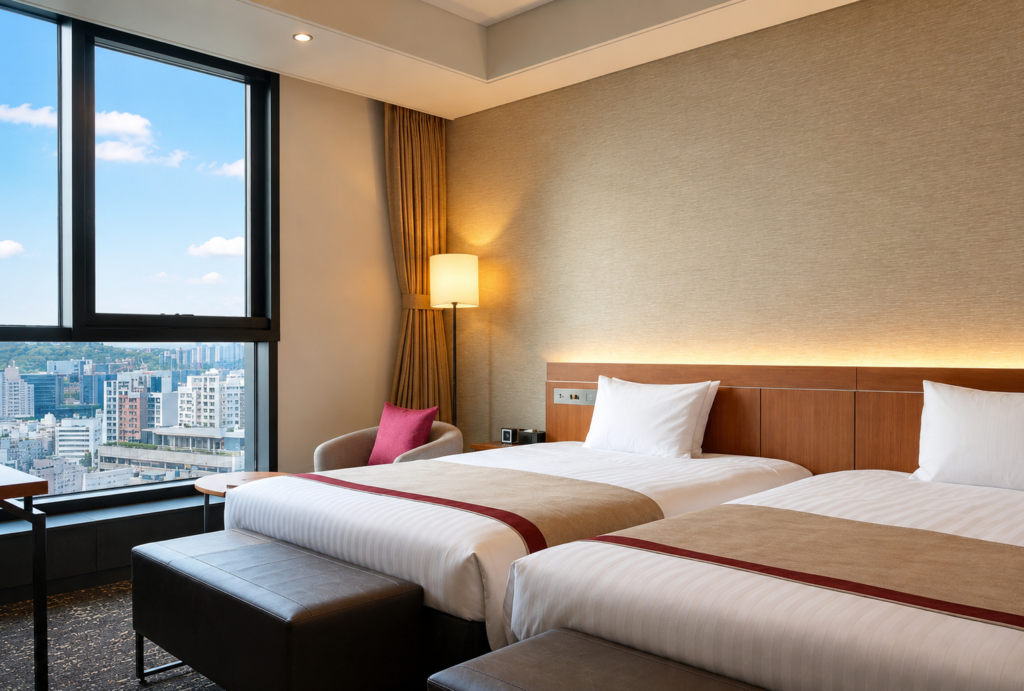
I checked the current Seoul hotel prices on Trip.com, and weekends were noticeably more expensive than weekdays. Across Seoul, the average was around $151 per night on weekdays and $198 on weekends.
You can definitely find rooms below $100, especially if you’re flexible about the location or hotel type. But for a first trip, I found $100–150 per night to be a more useful starting point for a clean hotel in a convenient area.
The cheapest room isn’t automatically a bad choice, and a more expensive hotel isn’t automatically better. I mainly use these numbers to get a rough budget first, then I look at the actual location, room and recent reviews.
The next question is where that budget goes furthest. I checked Myeongdong, Hongdae, Gangnam and Jongno separately, including a real hotel example in each area.
Hotel Prices by Area: Myeongdong, Hongdae, Gangnam & Jongno
Once I had a rough Seoul hotel budget in mind, I checked what that budget could actually get me in four popular areas. The differences weren’t just about price — location, room size and the kind of trip each area suits were just as important.
Myeongdong
For a first trip, I’d start searching around $100–160 per night. Myeongdong is one of the easiest areas to use as a base, especially if your itinerary includes places in several different parts of central Seoul.
One hotel I checked: G2 Hotel Myeongdong has appeared around the $100 range on some dates. It’s a useful example of what you can find without staying right in the busiest part of Myeongdong.
Check Myeongdong HotelsHongdae
I’d also start around $100–160 per night for a hotel near Hongik University Station. Hongdae stood out more for its atmosphere and transport than for being especially cheap — cafés, restaurants and nightlife are close by, and the AREX gives you direct access to Incheon Airport.
One hotel I checked: Holiday Inn Express Seoul Hongdae has appeared around $125 on some dates. It’s right by Hongik University Station, which is the main reason I’d keep it on the comparison list.
Check Hongdae HotelsGangnam
Around $110–170 per night is where I’d begin looking around Gangnam, Samseong and COEX. I wouldn’t choose Gangnam just because it’s famous — it makes much more sense when several places on your itinerary are already south of the Han River.
One hotel I checked: Hotel Peyto Samseong has appeared around $120 on some dates. The rooms aren’t especially large, but COEX and Samseong Station are close, which can be much more useful than saving a little on a hotel farther away.
Check Gangnam HotelsJongno
I’d start around $90–150 per night in Jongno. What interested me here wasn’t just the price — staying around Jongno or Insadong puts you close to Gyeongbokgung, Changdeokgung, Insadong and Ikseondong.
One hotel I checked: N285 Hotel Insadong has appeared around the $90 range on some dates. If your itinerary is focused on the palaces and older parts of central Seoul, I’d compare it with Myeongdong before deciding.
Check Jongno HotelsThe hotel prices above are examples from the dates I checked, not fixed rates. Your actual price will depend on your travel dates and availability.
Check the Location Before You Book
One thing I’d check carefully before booking a hotel in Seoul is its actual location on the map. A hotel can be listed as “Myeongdong,” “Hongdae” or “Gangnam” and still be farther from the subway than you expected.
That matters more than it might seem. You’ll probably use the subway several times during your trip, and after a full day of sightseeing, an extra transfer or a long walk back to the hotel gets old pretty quickly.
Check the nearest subway station
Don’t rely only on the neighborhood name. Open the map and check the actual walking route from the hotel to the station.
Look at the subway line too
Being close to a station is useful, but being on a line that connects easily to the places you want to visit can save you a lot of unnecessary transfers.
Think about your airport day
If you’re carrying luggage, check how you’ll get from Incheon Airport to the hotel. Hongdae has direct AREX access, while other areas may involve a transfer, airport bus or taxi for the last part of the trip. If you’re still planning the rest of your trip, my Korea travel preparation checklist covers other things worth checking before you fly.
Check the route at night
A 10-minute walk may feel completely different after a long day, especially with shopping bags or when the route includes hills, stairs or quieter side streets.
If two hotels are fairly close in price, I’d usually choose the one that makes my daily routes easier. In Seoul, a good location can save you more than money — it can save a surprising amount of time and walking over several days.
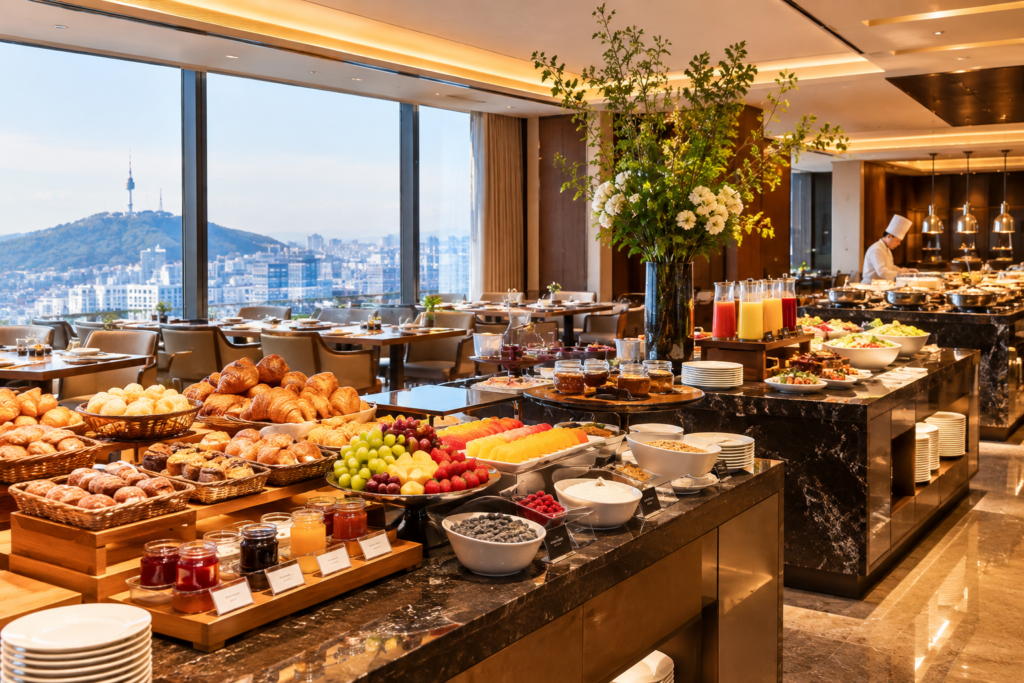
Breakfast, Luggage Storage, Laundry & Other Hotel Services
After narrowing down the area and location, I’d check a few hotel details that are easy to overlook on the booking page. They may not seem important at first, but some of them can make a big difference once you’re actually in Seoul.
Breakfast
Don’t assume breakfast is included just because you see it in the hotel photos. Some room rates include it and others don’t, even at the same hotel. Check what’s included in the exact room you’re booking.
Luggage storage
This is one I’d definitely check. If you arrive before check-in or have a late flight after checkout, being able to leave your suitcase at the hotel can save you from carrying it around Seoul for several hours.
Laundry
For a longer trip, check whether the hotel has self-service washers and dryers or only a paid laundry service. A coin laundry inside the hotel can be especially handy if Korea is just one stop on a longer trip.
Front desk & late check-in
Many larger hotels have a 24-hour front desk, but smaller properties may not. If your flight lands late at night, check the front desk hours and late check-in policy before booking.
Microwave, water & coffee
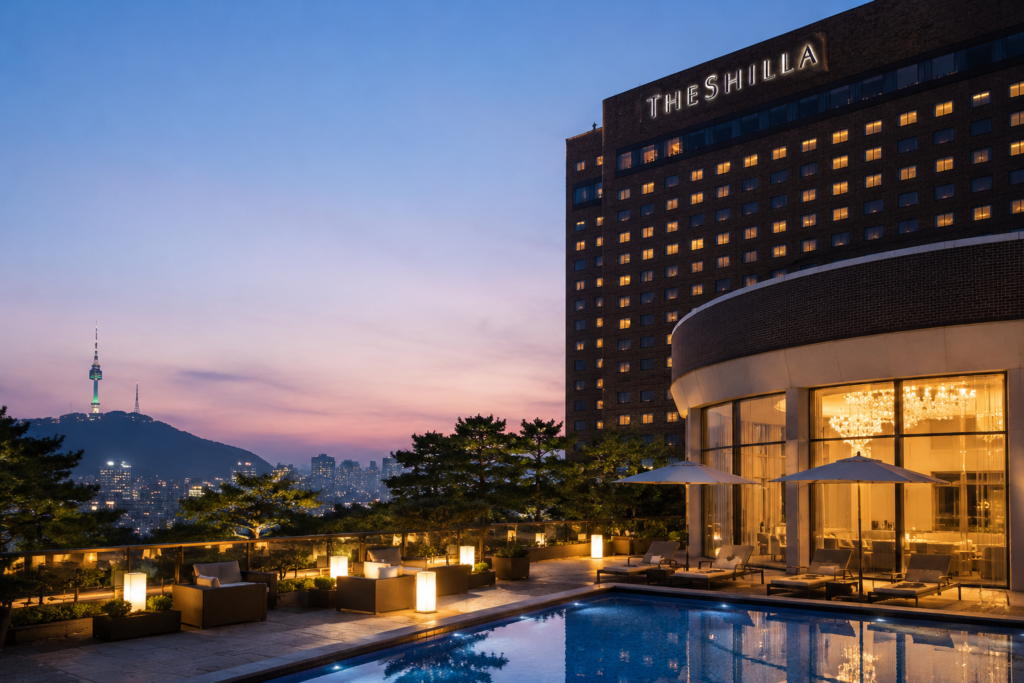
I wouldn’t choose a hotel just for these, but they’re useful once you’re there. Some hotels have a shared microwave, water dispenser, ice machine or self-service coffee machine in the lobby or on certain floors.
Check-in & checkout
Check the actual times rather than assuming they’re the same everywhere. Around 3 PM for check-in and 11 AM or noon for checkout is common, but each hotel sets its own policy. Early check-in or late checkout may also need to be arranged separately.
None of these would decide the hotel for me on their own. But once I’ve narrowed the list down to two or three places, these are exactly the details I’d compare before making the final booking.
What to Check Before You Book a Hotel in Seoul
Hotel photos are useful, but I wouldn’t make the final decision from the photos alone. Before booking, I’d open the room details, map and recent reviews and check a few things that aren’t always obvious at first glance.
Actual room size
Check the room size in square meters. Seoul hotel rooms can be compact, and the difference becomes much more noticeable when two people are traveling with large suitcases.
The exact room type
Don’t assume every room shown in the photos is the one you’re booking. Check the bed type, window, room size and maximum occupancy on the exact room option before paying.
Recent guest reviews
I usually look for repeated comments rather than one unusually good or bad review. Noise, cleanliness, air conditioning, beds, elevators and room condition are the kinds of details I’d pay attention to.
Entrance, elevators & luggage
If you’re traveling with large suitcases, check whether guests mention stairs, a difficult entrance or a small elevator. These details are easy to ignore until you’re standing there with your luggage.
Cancellation policy
Two rooms at the same hotel can have different cancellation rules. Before paying, check whether your rate is refundable and the deadline for free cancellation, especially if your Korea itinerary isn’t completely fixed yet.
Before I book, I’d open the exact room again and confirm the room type, size, cancellation policy and recent reviews. It only takes a few minutes and can catch details that are easy to miss while comparing hotels.
Which Seoul Area Is Best for Your Trip?
By this point, I’d choose the area based on my actual itinerary rather than trying to find one neighborhood that’s “best” overall. Where you plan to spend your mornings and evenings usually makes the decision much easier.
First trip with a mixed sightseeing itinerary → Myeongdong
This would be my starting point if I planned to visit a little bit of everything — palaces, shopping areas, markets and different neighborhoods across Seoul. It’s a practical central base when your days aren’t focused on just one part of the city.
Cafés, nightlife and evenings out → Hongdae
Hongdae makes more sense if you expect to come back late after dinner, cafés, bars or live music. Staying nearby means you don’t have to cross the city every night, and the direct AREX connection is useful on your airport days.
K-beauty, COEX, Apgujeong or Cheongdam → Gangnam
I’d choose Gangnam when several days of the trip are already focused south of the Han River. It can be especially practical if you’ve booked beauty treatments or have plans around COEX, Apgujeong or Cheongdam.
Palaces, Insadong and older Seoul → Jongno
Jongno would be high on my list if I wanted to spend more time around Gyeongbokgung, Changdeokgung, Insadong and Ikseondong. It’s also the area I’d look at if I wanted historic sights and traditional neighborhoods close to where I’m staying.
Look at the places you’ve already saved on your Seoul itinerary. If several of them cluster around one part of the city, start your hotel search there. If they’re spread all over Seoul, Myeongdong is the first area I’d compare.
My Final Pick: Where I’d Stay in Seoul
If this were my first trip to Seoul and my itinerary was still fairly open, Myeongdong would be the first area I’d check. It’s central enough to work well when your plans are spread across different parts of the city, and it gives you plenty of hotel options to compare.
I wouldn’t book Myeongdong automatically, though. I’d compare it with one other area that fits my itinerary — Hongdae for nightlife and airport access, Gangnam for plans south of the Han River, or Jongno for palaces and older parts of Seoul. Then I’d make the final choice from the actual hotels available for my dates.
First trip with no clear base yet? Check Myeongdong first, compare one other area that fits your itinerary, and then choose the hotel based on its actual location, room and recent reviews.
Check the location, room details and recent reviews before you book.